

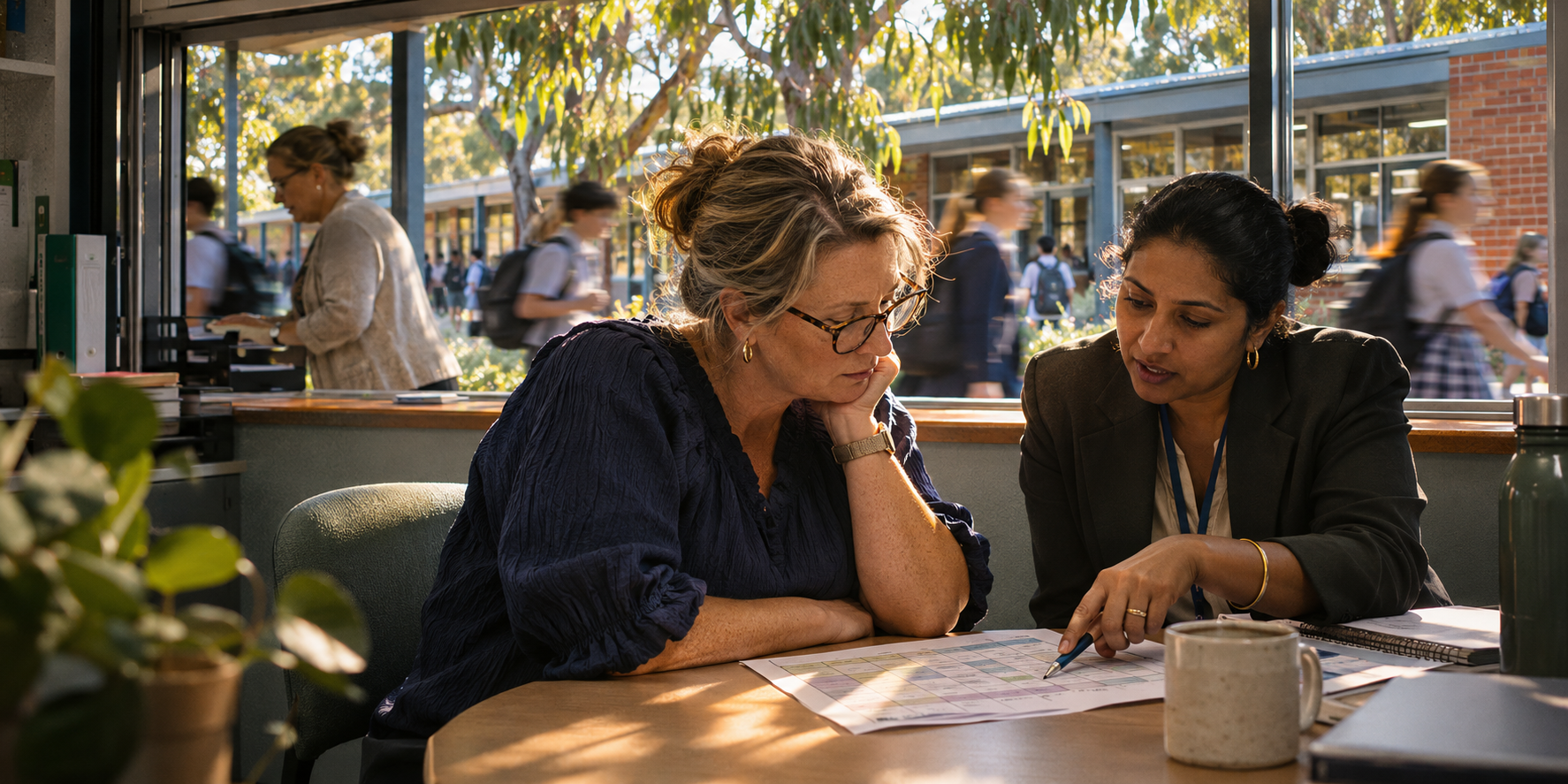
A decade of growing demands, shifting expectations, wild surprises, and the non-stop adventure of leading Australian schools.
Cast your mind back ten years. Even in 2016, running a school was no walk in the park.
Principals were already juggling improvements in student outcomes, teacher morale, operational logistics, finding good staff, ever-shifting curriculums, and the initial wave of social media frenzy.
Fast-forward to today, and none of those complex tasks have gone off the list. In fact all that has changed is the addition of a whole host of new demands.
On any given Tuesday, a principal might wear the hat of an educational visionary, PR guru, HR mediator, crisis manager, tech troubleshooter, plumber, arbourist and counsellor. Sometimes all before morning recess!
As The Flourish Movement celebrates its 10th anniversary, it’s the perfect moment to take a breath, look back on this whirlwind decade, and talk about why supporting our school leaders matters more than ever.
In 2016, the top three challenges for school leaders were workload, poor systems and curriculum change. A decade on, the mental health of students, staff and parents tops the list, followed by finding good staff and managing workload. Workload has stayed in the top three, and the shift around it tells a story about what schools are asking of their leaders today.
The Ever-Expanding To-Do List
At its heart, being a principal is about inspiring learning, nurturing school culture, and helping teachers shine.
In reality? Leaders spend an awful lot of time battling mountains of paperwork and operational fires.
Between compliance checks, endless reporting, parent demands, risk management, and staffing puzzles, big-picture goals can easily get pushed to the back burner.
You step into your office ready to craft a brilliant strategic plan for your school, and five minutes later you're covering a class, soothing an anxious parent, or navigating an urgent student wellbeing crisis.
It isn't just the sheer volume of tasks; it’s the whiplash of switching from high-level strategy to sudden crisis control fifty times a day - leaving frustratingly little room for the work that matters most.
Emotional Heavy Lifting & Rising Pressures
Unfortunately, the atmosphere around schools has grown a lot tougher over the last decade.
The 2025 Australian Principal Occupational Health, Safety and Wellbeing Survey showed that nearly half of our principals have faced physical aggression, and over half have dealt with threats. Over 15 years, those numbers have nearly doubled - a stark statistic that highlights just how tense things can get.
On top of physical safety concerns, the emotional weight of the job has soared.
School leaders are constantly holding space for struggling students, burnt-out staff, and stressed families.
Absorbing everyone else's stress takes a real toll - a phenomenon known as secondary traumatic stress, which we explored in our research study, “The Silent Cost: Impact and Management of Secondary Traumatic Stress in Educators.” Read here: (insert link)
School leaders carry the heavy task of supporting everyone around them while staying calm, making tough calls, and keeping things stable.
And let’s be honest: that kind of emotional charge doesn't just switch off when the final bell rings.
COVID-19: The Ultimate Curveball
If the decade had a plot twist, COVID-19 was definitely it.
Virtually overnight, principals had to translate ever-changing health mandates, pivot to remote learning, reassure worried communities, and keep schools running with no map.
Schools quickly became the place that entire neighbourhoods looked to for stability, which usually meant principals were the ones making sure things stayed steady.
When classrooms finally reopened, the fallout didn't magically vanish.
Leaders were left guiding staff through fatigue, helping students recover ground, and meeting sky-high community expectations.
COVID didn’t create all these challenges, but it certainly hit the fast-forward button on them.
Staffing Shortages & Constant Connectivity
Then came the teacher shortage, bringing a whole new puzzle to solve each morning.
Now principals aren't just leading teams; they're scrambling for cover teachers, filling in gaps themselves, and keeping learning on track against the odds.
Meanwhile, smartphone notifications and messaging apps mean leaders are perpetually in arms reach of everyone.
Improved communication and access is great, but it’s created an unwritten rule that replies should happen in minutes, not hours.
Finding where work stops and home life begins has turned into a real challenge.
When Pressures Pile Up
It isn’t just one big crisis that causes burnout, it’s the slow, steady drip of constant interruptions, tough conversations, and non-stop decision-making.
When your day is spent putting out fires, there’s very little breathing room left for actual strategic thinking or self-care.
Unsurprisingly, research highlights rising rates of stress and exhaustion across school leadership.
It's not that leaders aren't tough or dedicated or hard working. They always have been.
It’s simply that when recovery gets saved for "whenever everything is done" (which is never!), staying energised and effective becomes very difficult.
To keep great leaders in our schools, we have to change the equation.
Looking Ahead to the Next Decade
The job has evolved, and the way we support principals needs to keep pace.
Sustainable leadership isn't just about telling individuals to "drink more water and meditate." It means protecting focus time, reducing workload and reporting, streamlining workflows, acknowledging the emotional weight of the role, and building environments where leaders can actually recharge.
Back in 2016, The Flourish Movement started with a simple vision: give school leaders practical, evidence-based tools to navigate the demands of their roles while protecting their wellbeing and effectiveness.
Ten years and over 1,300 school leaders later, that mission is more vital than ever.
Because supporting school leaders isn't just about helping them survive the week.
It’s about creating the conditions where great leaders can build sustainable work practices, prioritise their health, and thrive in their careers for the long haul.
The job has changed. The demands have grown. And our support for school leaders has to keep up!